Cirsium edule
).
≈ 3 min read
Names in other languages
No names in other languages are held for this entry yet.
Article bodies are English and are not machine-translated. A name in another language is not a translation of the article.
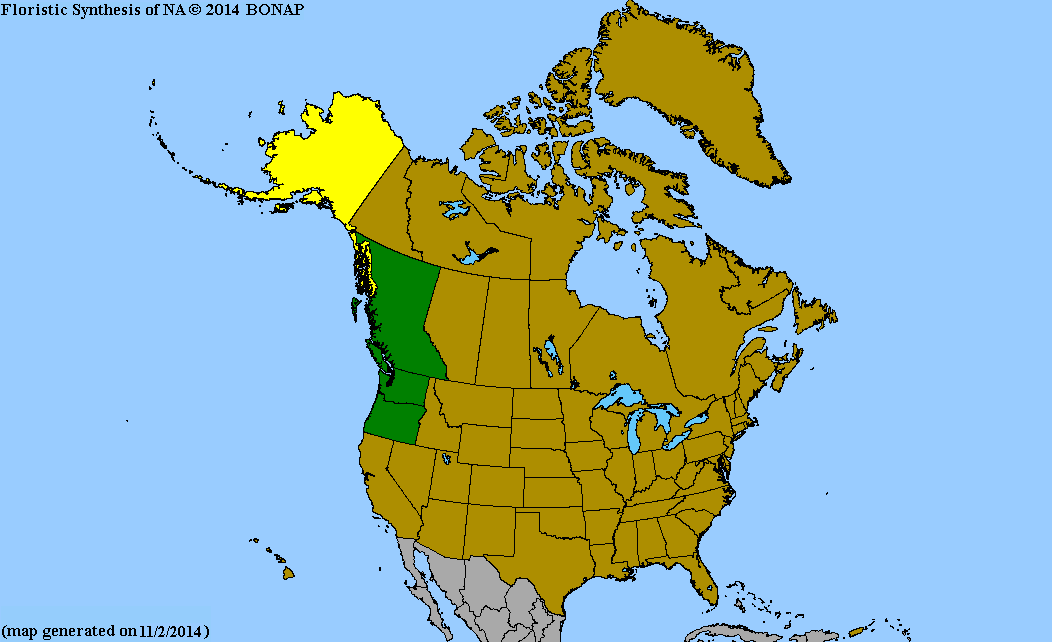
). Cirsium edule, the edible thistle or Indian thistle, is a species of thistle in the genus Cirsium, native to western North America from southeastern Alaska south through British Columbia to Washington and Oregon, and locally inland to Idaho. It is a larval host to the mylitta crescent and the painted lady.
Cirsium edule is a tall herbaceous perennial plant, reaching in height. The leaves are very spiny, lobed, 10–30 cm long and 2–5 cm broad (smaller on the upper part of the flower stem). The inflorescence is 3–4 cm diameter, purple, with numerous disc florets but no ray florets.
The achenes are 4–5 mm long, with a downy pappus which assists in wind dispersal. It is monocarpic, growing as a low rosette of leaves for a number of years, then sending up the tall flowering stem in spring, with the plant dying after seed maturation. Edible thistle is used by Native Americans for its edible roots and young shoots.
The roots are sweet, but contain inulin, which gives some people digestive problems. ;Varieties * Cirsium edule var. edule - Oregon, Washington * Cirsium edule var. macounii (Greene) D.J.Keil - Oregon, Washington, British Columbia, Alaska * Cirsium edule var. edule wenatchense D.J.Keil - Washington
).]] Cirsium edule, the edible thistle or Indian thistle, is a species of thistle in the genus Cirsium, native to western North America from southeastern Alaska south through British Columbia to Washington and Oregon, and locally inland to Idaho. It is a larval host to the mylitta crescent and the painted lady.
Cirsium edule is a tall herbaceous perennial plant, reaching in height. The leaves are very spiny, lobed, 10–30 cm long and 2–5 cm broad (smaller on the upper part of the flower stem). The inflorescence is 3–4 cm diameter, purple, with numerous disc florets but no ray florets.
The achenes are 4–5 mm long, with a downy pappus which assists in wind dispersal. It is monocarpic, growing as a low rosette of leaves for a number of years, then sending up the tall flowering stem in spring, with the plant dying after seed maturation. Edible thistle is used by Native Americans for its edible roots and young shoots.
The roots are sweet, but contain inulin, which gives some people digestive problems. Varieties Cirsium edule var. edule - Oregon, Washington Cirsium edule var. macounii (Greene) D.J.Keil - Oregon, Washington, British Columbia, Alaska Cirsium edule var. edule wenatchense D.J.Keil - Washington
External links
Turner Photographics Pacific Northwest Wildflowers Lady Bird Johnson Wildflower Center, University of Texas Calphotos photo gallery, University of California Paul Slichter, Thistles East of the Cascade Mountains, Indian Thistle, Edible Thistle Cirsium edule var. wenatchense
Text derived from https://en.wikipedia.org/w/index.php?oldid=1163504197 under CC BY-SA 4.0; modifications have been made.