Hypericum hypericoides
≈ 2 min read
Names in other languages
No names in other languages are held for this entry yet.
Article bodies are English and are not machine-translated. A name in another language is not a translation of the article.
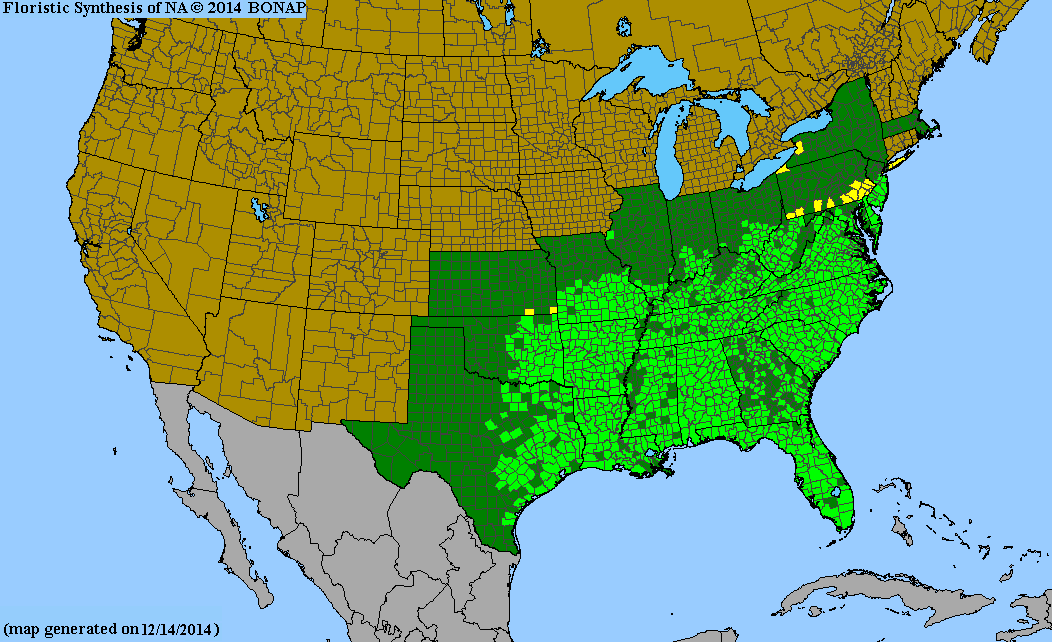
Hypericum hypericoides, commonly called St. Andrew's cross, is a species of flowering plant in the St. John's wort family, Hypericaceae. It is native to the Southeastern United States, Mexico, Central America, and the Caribbean. Its preferred habitat is dry woods on acidic soil. It is a small shrub or shrublet that produces yellow flowers with four petals. Individuals are between 3 and 10 decimeters (approximately 1 to 3.3 feet) in height. Leaves range in shape between linear, elliptic, and oblanceolate in shape, and reach a length between 8 and 26 millimeters long. There are, according to some classifications, 2 subspecies, hypericoides and multicaule. However, the latter of these is usually classified as a separate species, Hypericum stragulum.
Hypericum hypericoides, commonly called St. Andrew's cross, is a species of flowering plant in the St. John's wort family, Hypericaceae. It is native to the Southeastern United States, Mexico, Central America, and the Caribbean. Its preferred habitat is dry woods on acidic soil. It is a small shrub or shrublet that produces yellow flowers with four petals. Individuals are between 3 and 10 decimeters (approximately 1 to 3.3 feet) in height. Leaves range in shape between linear, elliptic, and oblanceolate in shape, and reach a length between 8 and 26 millimeters long. There are, according to some classifications, 2 subspecies, hypericoides and multicaule. However, the latter of these is usually classified as a separate species, Hypericum stragulum.
References
Text derived from https://en.wikipedia.org/w/index.php?oldid=1316115007 under CC BY-SA 4.0; modifications have been made.