Karakengir
≈ 2 min read
Names in other languages
No names in other languages are held for this entry yet.
Article bodies are English and are not machine-translated. A name in another language is not a translation of the article.
The Karakengir ( ; ), also known as Kengir, is a river in the Ulytau District, Ulytau Region, [ Kazakhstan. It has a length of and a drainage basin of . It is one of the most important tributaries of the Sarysu.
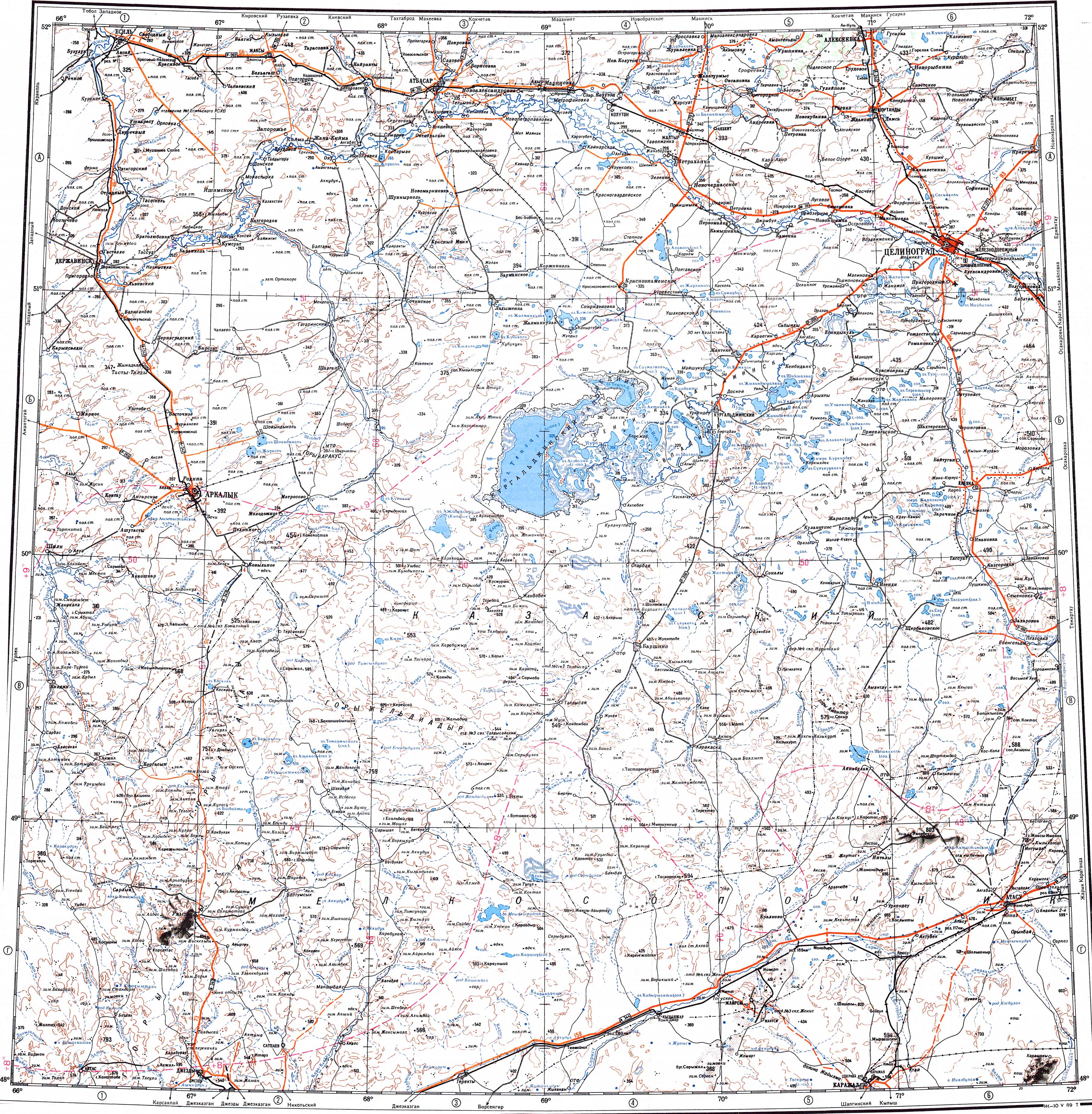
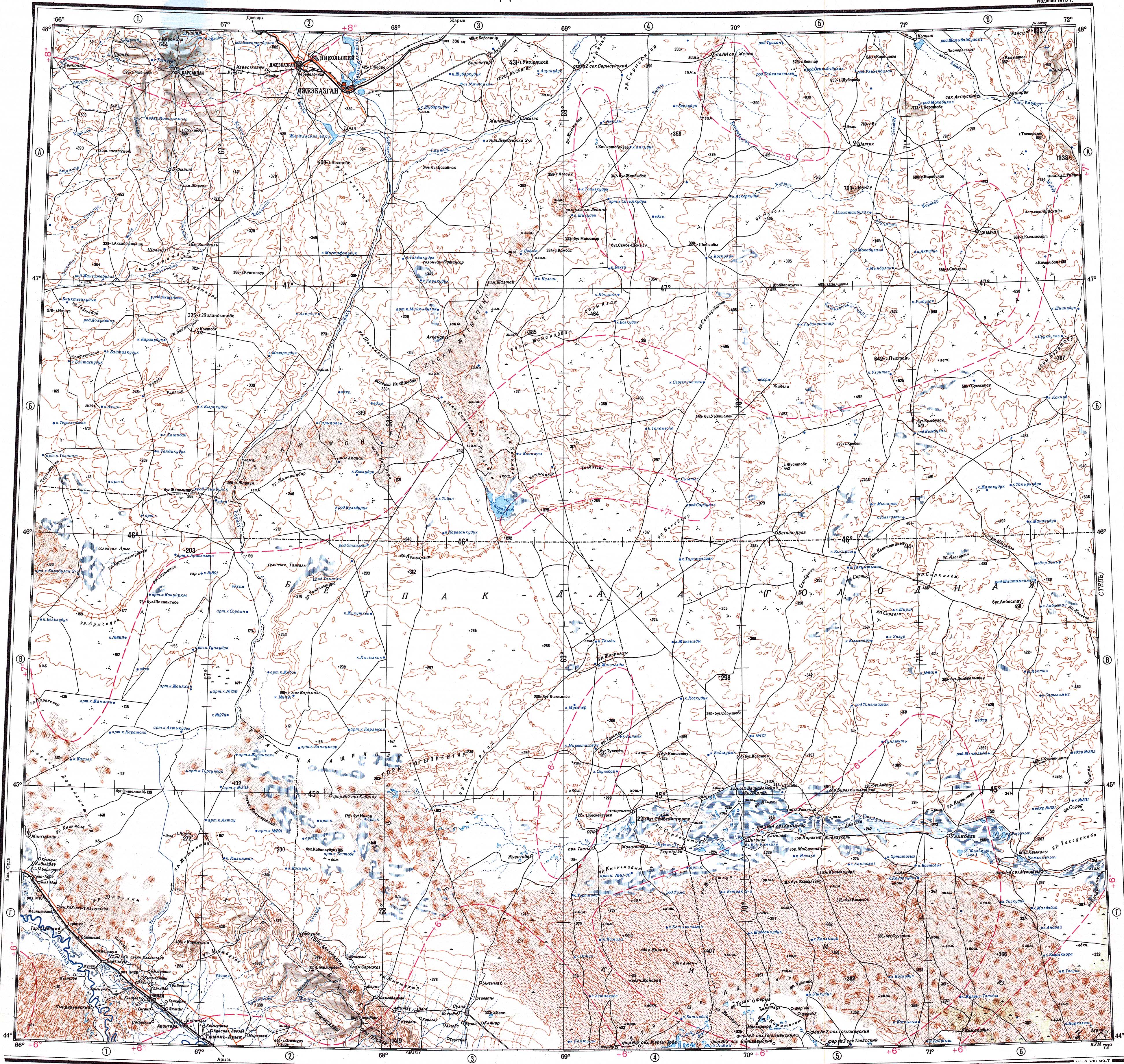
The city of Zhezkazgan, the capital of Ulytau Region, is located by its banks. A reservoir was built close to the city at the time of the Kazakh SSR.
Course
The Karakengir river originates in the Zhaksy Arganaty massif of the Ulytau, Kazakh Uplands. Its source is in a spring near Barakkol lake. It heads first southeastwards, then midway through its course it bends slightly southwestwards.
In its last stretch it bends again and heads roughly southwards through a floodplain. Finally it joins the right bank of the Sarysu to the south of Zhezkazgan. The river valley is between and wide and its channel is bound by steep banks with up to high cliffs in some stretches.
The river is fed by snow and its level is at its highest in April. By the summer the Karakengir stops flowing and splits into disconnected pools. The main tributaries are the long Sarykengir, the long Zhylandy, and the long Zhezdi.
See also
List of rivers of Kazakhstan
External links
The Great Silk Road in Central and Eastern Kazakhstan
Text derived from https://en.wikipedia.org/w/index.php?oldid=1368026500 under CC BY-SA 4.0; modifications have been made.