Small Arms Protective Insert
vest with corresponding SAPI plate.
≈ 3 min read
Names in other languages
No names in other languages are held for this entry yet.
Article bodies are English and are not machine-translated. A name in another language is not a translation of the article.
vest with corresponding SAPI plate. The Small Arms Protective Insert (SAPI) is a ceramic ballistic plate used by the United States Armed Forces. It was first used in the Ranger Body Armor and Interceptor Body Armor; both are ballistic vests.
It is now also used in the Improved Outer Tactical Vest as well as the Modular Tactical Vest, in addition to commercially available "plate carriers". The Kevlar Interceptor vest itself is designed to stop projectiles up to and including 9×19mm Parabellum submachine gun rounds, in addition to fragmentation. To protect against higher-velocity rifle rounds, SAPI plates are needed.
vest with corresponding SAPI plate.]] The Small Arms Protective Insert (SAPI) is a ceramic ballistic plate used by the United States Armed Forces. It was first used in the Ranger Body Armor and Interceptor Body Armor; both are ballistic vests.
It is now also used in the Improved Outer Tactical Vest as well as the Modular Tactical Vest, in addition to commercially available "plate carriers". The Kevlar Interceptor vest itself is designed to stop projectiles up to and including 9×19mm Parabellum submachine gun rounds, in addition to fragmentation. To protect against higher-velocity rifle rounds, SAPI plates are needed.
ESAPI
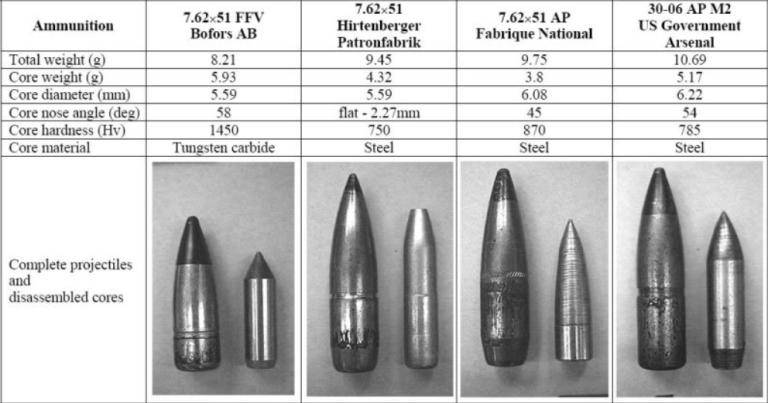
in 2008.]] In May 2005, the U.S. Armed Forces began replacing the standard Small Arms Protective Insert plates with the Enhanced Small Arms Protective Insert (ESAPI). An ESAPI provides protection from .30-06 Springfield M2 armor-piercing (AP) with a steel penetrator in accordance with the NIJ Level IV standard, but costs about $600 per plate, 50% more than SAPI plates.
They are produced by Ceradyne, BAE Systems, and ArmorWorks Enterprises. Newer revisions are also produced by CW Security Solutions, CW Armor, Point Blank Enterprises and Leading Technology Composites.
XSAPI
A call for a next generation plate, to stop even greater velocity threats than the ESAPI plate was issued by the U.S. Army in 2008. The X Threat Small Arms Protective Insert plates are specifically allowed scalar or flexible systems , and asked for better coverage, with less than a pound of additional weight.
XSAPI did in fact offer slightly better protection, at the cost of more weight and thicker armor profile. The XSAPI is intended to protect against an "X-Threat", which is able to be inferred from another source to be the M993 7.62 NATO armor piercing tungsten carbide projectile. In addition, there is record of the FBI utilizing the plate in May 2011.
The plates were developed in response to a perceived threat of AP projectiles in Iraq and Afghanistan. Over 120,000 inserts were procured; however, the AP threats they were meant to stop never materialized, and the plates were put into storage.
Text derived from https://en.wikipedia.org/w/index.php?oldid=1355046360 under CC BY-SA 4.0; modifications have been made.