Tokrau
≈ 3 min read
Names in other languages
No names in other languages are held for this entry yet.
Article bodies are English and are not machine-translated. A name in another language is not a translation of the article.
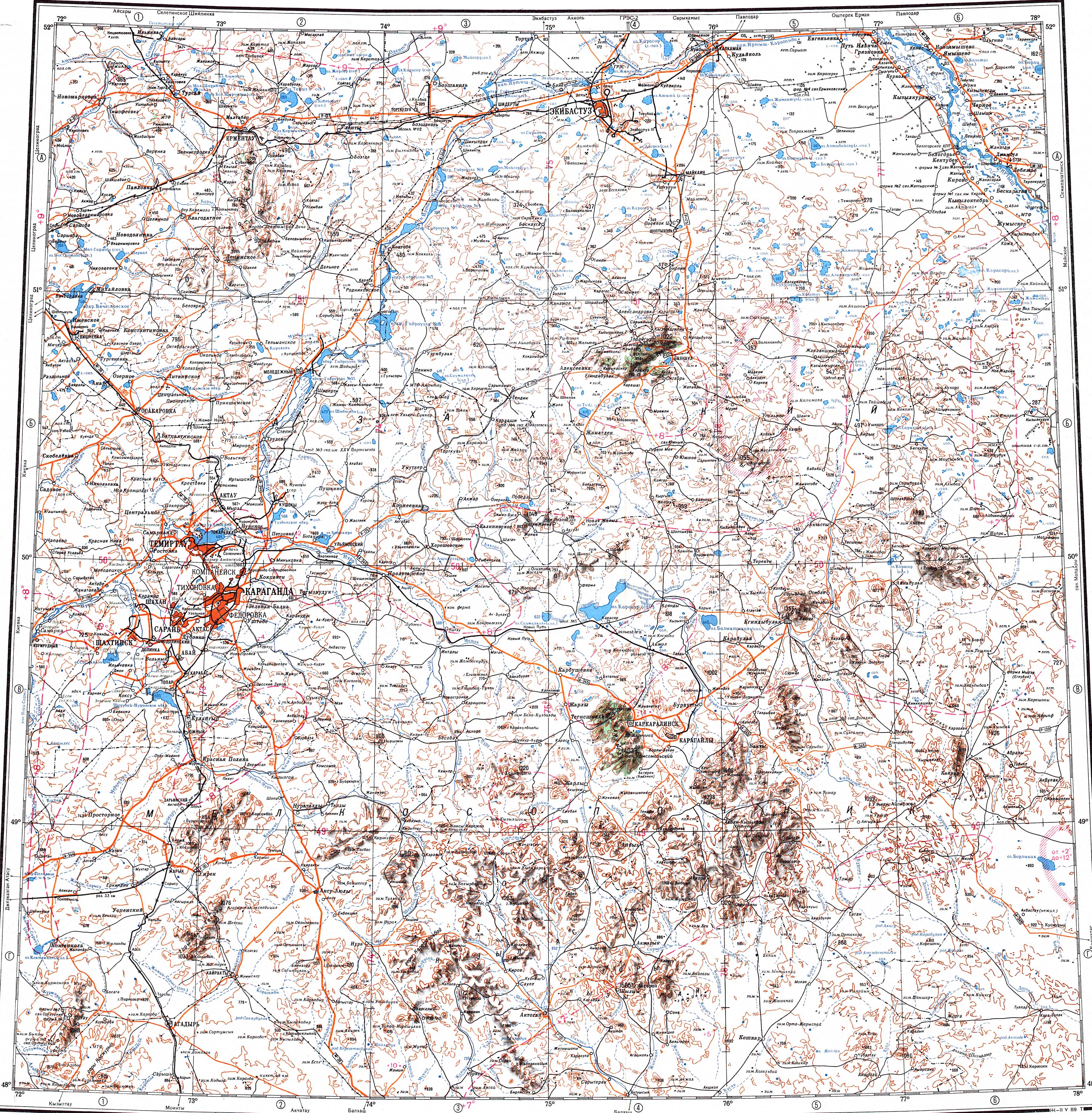
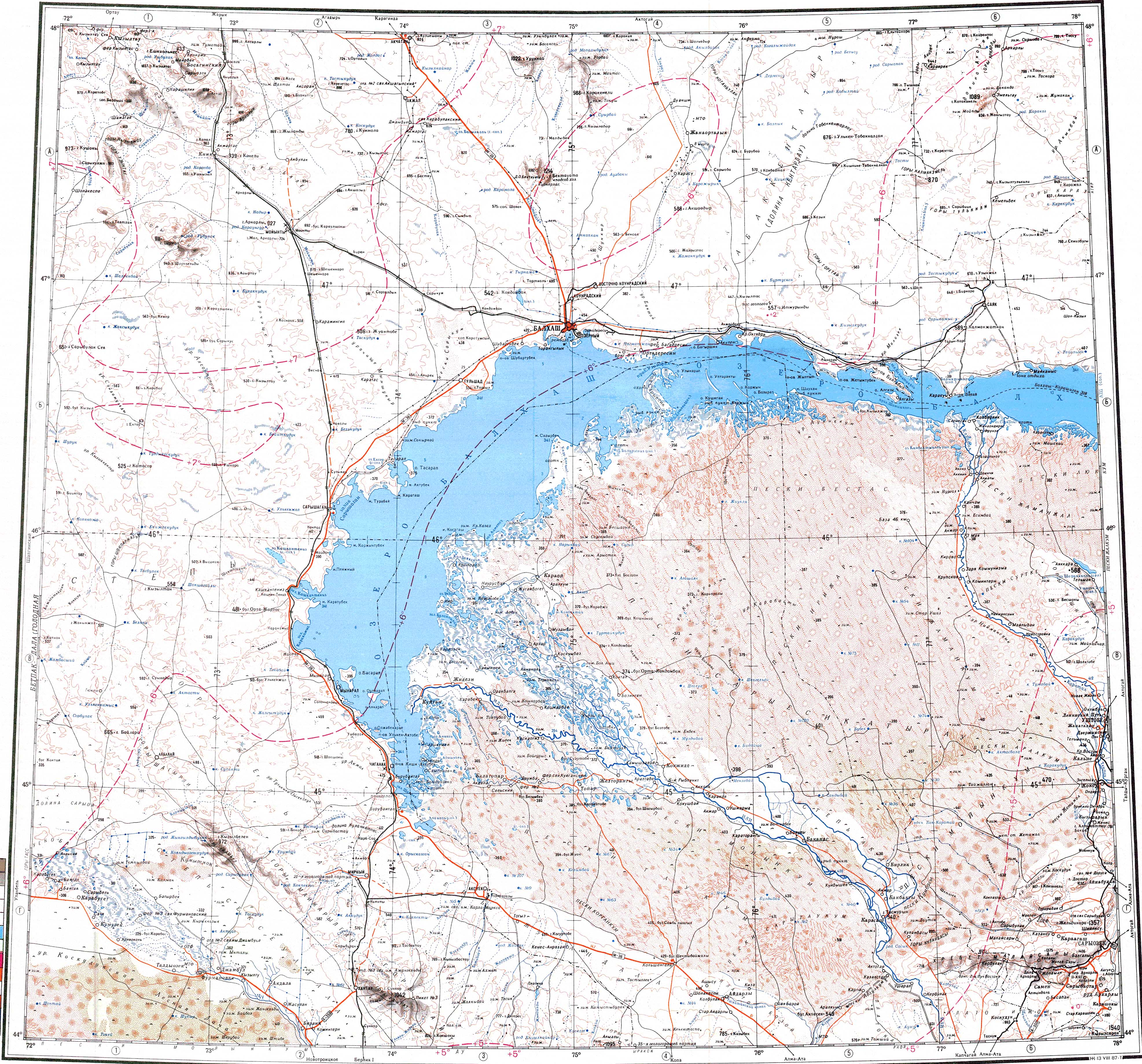
The Tokrau ( ) is a river in Karaganda Region, Kazakhstan. It has a length of and a drainage basin of . The Tokrau flows by Aktogay, the administrative center of Aktogay District, Karaganda Region, as well as by Saryterek village.
Its mouth lies northeast of Balkhash City and east of the Bektauata range. The Egizkoytas burial complex of the Bronze Age and Early Iron Age is located in the upper course of the river. The Tokrau Formation, a fossiliferous stratigraphic unit in Kazakhstan whose strata date back to the Paleozoic, was named after the river.
Course
The Tokrau river originates in the Kyzyltas range of the southern Kazakh Uplands, to the north of Mt Karashoki. It heads roughly southwards within a narrow channel all along its course. Its valley may reach at its widest, narrowing to in gorges.
The floodplain is between and wide. About away from the coast of Lake Balkhash to the south, the river fans out into many arms in a dry, widening plain. Finally its waters disperse in the semidesert sands to the north of the lakeshore.
This last stretch of the Tokrau was an ancient delta dating back to the time when the river reached Lake Balkhash. The Tokrau is fed mainly by winter snows. Its water is fresh and the river channel fills between March and May, although less often it may fill in late autumn too.
The lower stretch frequently dries up, stagnating into disconnected pools. Very rarely, in years of abundant spring floods, the waters of the river may break through the desert area and trickle into the endorheic lake Balkhash.
Tributaries
The main tributaries of the Tokrau are the Zhalanash, the long Karamende, the Kosabai, the Karatal and the long Zhinishke.
See also
List of fossiliferous stratigraphic units in Kazakhstan List of rivers of Kazakhstan
External links
The Great Silk Road in Central and Eastern Kazakhstan Plant diversity in the early Devonian
Text derived from https://en.wikipedia.org/w/index.php?oldid=1367952852 under CC BY-SA 4.0; modifications have been made.