Tyari
≈ 9 min read
Names in other languages
No names in other languages are held for this entry yet.
Article bodies are English and are not machine-translated. A name in another language is not a translation of the article.
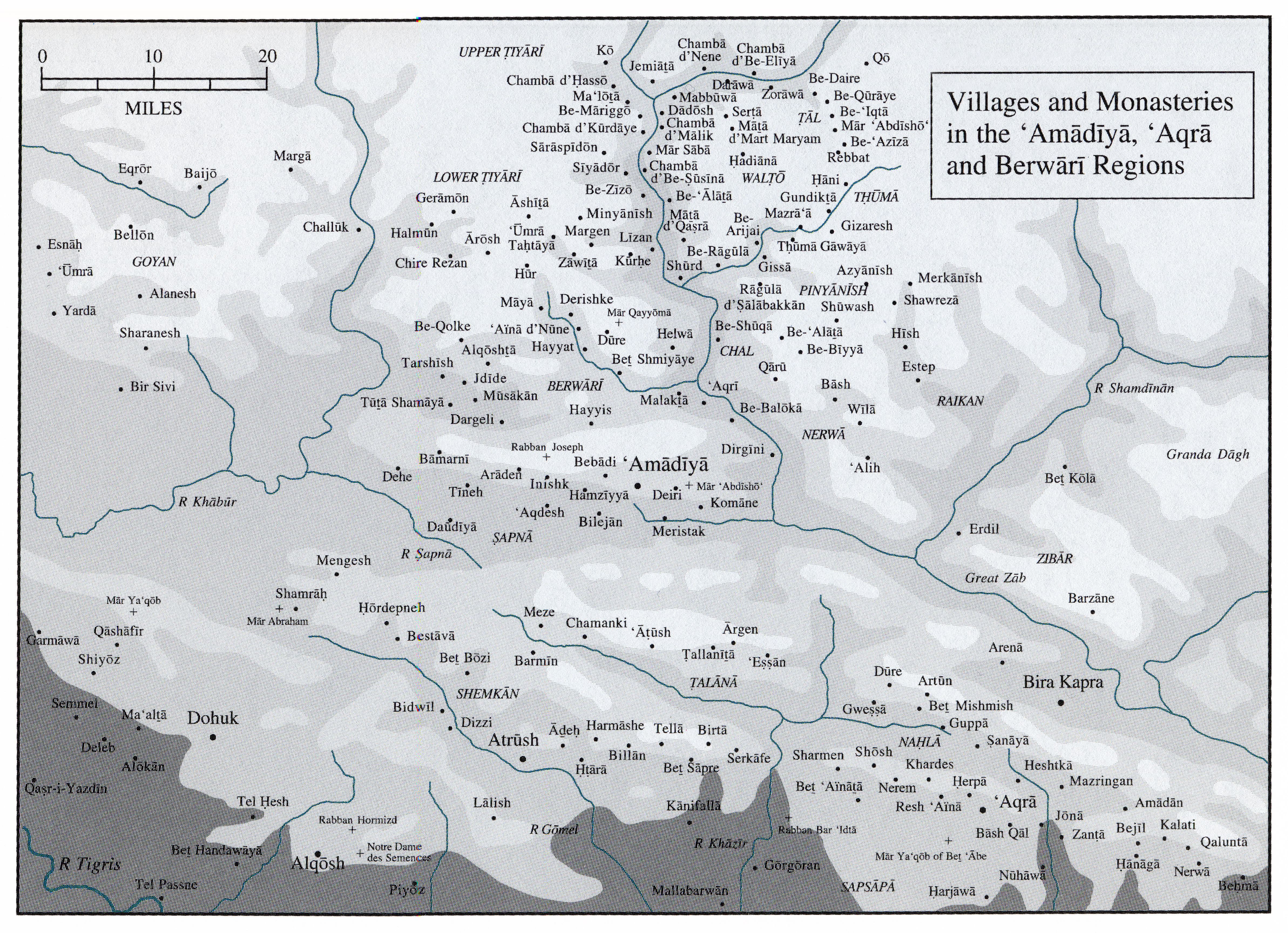
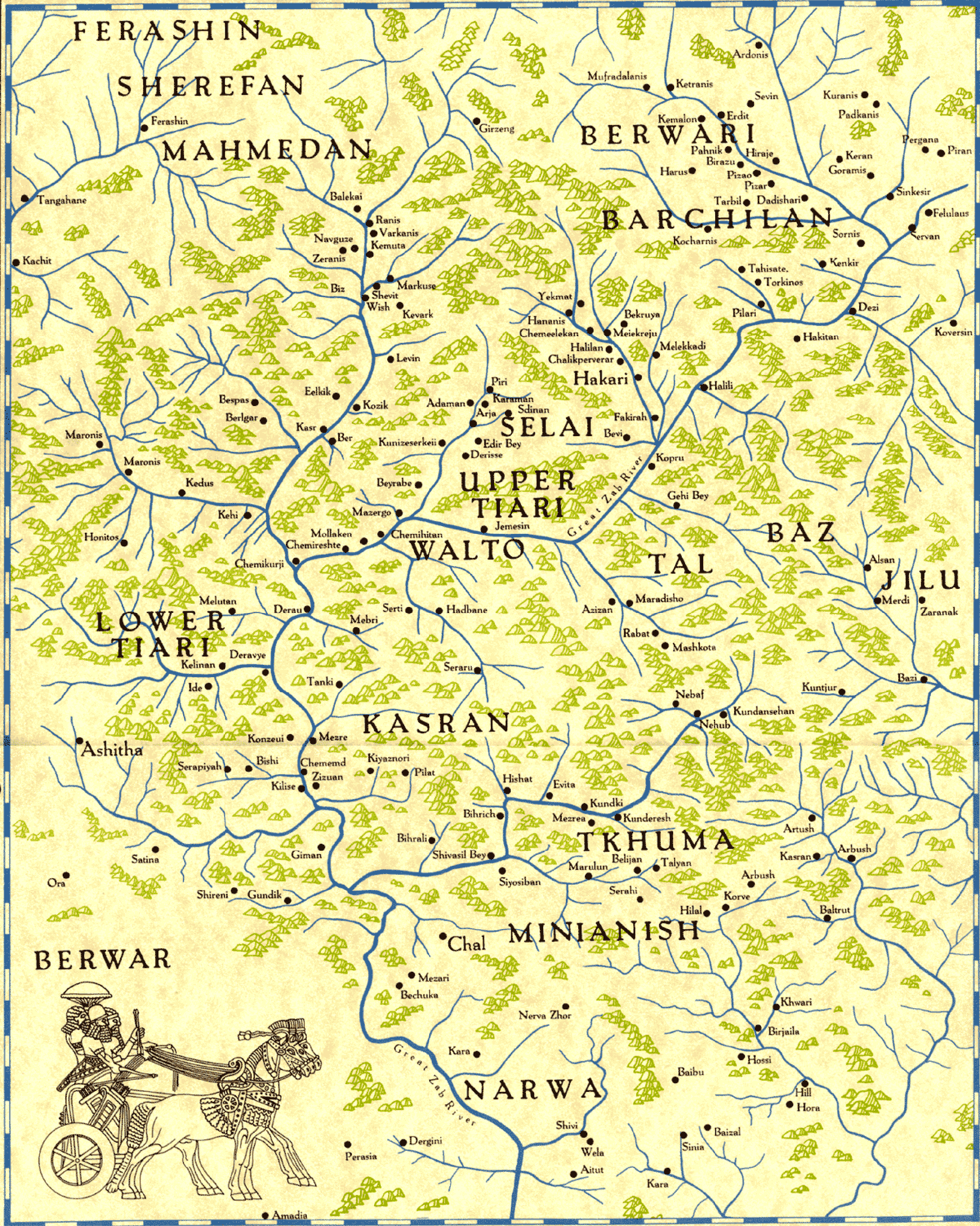
Tyari ( ) is an Assyrian tribe and a historical district within Hakkari, Turkey. The area was traditionally divided into Upper Tyari (Tyari Letha ) and Lower Tyari (Tyari Khtetha )–each consisting of several Assyrian villages. Both Upper and Lower Tyari are located on the western bank of the Zab river. Today, the district mostly sits in around the town of Çukurca. Historically, the largest village of the region was known as Ashitha. According to Hannibal Travis the Tyari Assyrians were known for their skills in weaving and knitting. Before 1915, Tyari was home to Assyrians from the Bet Tyari tribe as well as a minority of Kurds and Armenians. Following the Assyrian genocide, Ṭyārāyē, along with other Assyrians residing in the Hakkari highlands, were forced to leave their villages in southeast Anatolia and fled to join their fellow Assyrian brethren in modern-day northern Iraq (Sarsink, Sharafiya, Chammike and various villages in the Nahla valley ), northeastern Syria (Tel Tamer and Al Hasakah), Armenia, Georgia and, from the late 20th century, to western countries. The Tyari tribe was, according to Robert Elliot Speer, one of the Assyrian "ashirets". In 1869 there were 15,000 Tyari Assyrians living in 2,500 houses in the Tyari district according to John George Taylor in a report to the Earl of Clarendon.…
Tyari ( ) is an Assyrian tribe and a historical district within Hakkari, Turkey. The area was traditionally divided into Upper Tyari (Tyari Letha ) and Lower Tyari (Tyari Khtetha )–each consisting of several Assyrian villages. Both Upper and Lower Tyari are located on the western bank of the Zab river. Today, the district mostly sits in around the town of Çukurca. Historically, the largest village of the region was known as Ashitha. According to Hannibal Travis the Tyari Assyrians were known for their skills in weaving and knitting. Before 1915, Tyari was home to Assyrians from the Bet Tyari tribe as well as a minority of Kurds and Armenians. Following the Assyrian genocide, Ṭyārāyē, along with other Assyrians residing in the Hakkari highlands, were forced to leave their villages in southeast Anatolia and fled to join their fellow Assyrian brethren in modern-day northern Iraq (Sarsink, Sharafiya, Chammike and various villages in the Nahla valley ), northeastern Syria (Tel Tamer and Al Hasakah), Armenia, Georgia and, from the late 20th century, to western countries. The Tyari tribe was, according to Robert Elliot Speer, one of the Assyrian "ashirets". In 1869 there were 15,000 Tyari Assyrians living in 2,500 houses in the Tyari district according to John George Taylor in a report to the Earl of Clarendon. The Tyari Assyrians lived across 51 different villages and constituted 50,000 members1 - making it the most powerful among the semi-independent Assyrian tribes. The Tyari district is located in the boundaries of the ancient Neo-Assyrian kingdom of Adiabene. ==Etymology== Tyari may be a variation of the ancient "Autiyara" (Assyria). American historian Albert T. Olmstead describes in his work History of the Persian Empire how the Persian General Vaumisa wins a battle in the Autiyara districts located in Tyari and mentions that this is where Assyrian Christians maintained independence until modern times. In Syriac, the word ( ) is the plural form of , meaning "sheepfold" or "grazing area". Indeed, the Assyrians of Tyari were renowned even amongst neighboring Kurds and Armenians for their yogurt, cheese and other dairy products mostly made from sheep or goat's milk. They were also famous for their textiles, which again were spun and woven from sheep's wool. They also made woolen felt for their characteristic conical caps, a style dating back to the Assyrian Empire. ==Dialect== The dialect of Tyari belongs to the Ashiret group, along with the dialects of e.g. Tkhuma and Baz, of the Northeastern Neo-Aramaic (NENA) dialects. Like Jīlū, the Tyari dialect is a very distinct Assyrian Neo-Aramaic dialect. Unlike the Jilu, Baz and Gawar dialects (which are very similar to each other), this one is more "thick". It is, in a way, a sort of a "working class" accent of the Assyrian dialects. Dialects within Tyari, and especially the Western group, have more in common with Chaldean Neo-Aramaic than with Iraqi Koine (similar to General Urmian). The Tyari dialect is divided into two main sub-dialects; upper Tyari and lower Tyari. Many Tyari speakers can switch back and forth from Tyari to "Assyrian Standard" (or "Iraqi Koine") when conversing with Assyrian speakers of other dialects. Some speakers tend to adopt a form of verb conjugation that is closer to the Iraqi Koine or Urmian Standard. This is attributed to the growing exposure to Assyrian Standard-based literature, media, and its use as a liturgical language by the Assyrian Church of the East. Furthermore, it is customary for Assyrian artists to generally sing in Iraqi Koine for them to be intelligible and have widespread recognition. Songs in Tyari dialects are usually of the folk-dance music genre and would attract certain audiences. ===Suffixes=== Although possessive affixes (beti - "my house") are more convenient and common among Assyrian speakers, those with Tyari and Barwari dialects take a more analytic approach regarding possession, just like modern Hebrew and English. ==Villages and sub-clans in Tyari== ==Clothing== About the national dress worn by the Tyari men in the Bakuba camp, Brigadier-General Austin wrote; "Fine upstanding fellows they are, ...their legs, encased in long loose baggy trousers of a greyish hue originally, but so patched all over with bits of blue, red, green and other colors that their pants are veritable patch work. A broad cloth, "Kammar band," or waist band, is folded several times round the trunk of the body, and a short cut-away jacket of amazing colors, worn over a thin cotton variegated shirt. The head-dress consists of conical felt cap as depicted in frescoes of Assyrians of thousands of years ago, and which has survived to this day." "Among them are a number of Tyari men, whose wild looks, combined with the splendour of their dress and arms, are a great interest. […] Their jackets are one mass of gold embroidery (worked by Jews), their shirts, with hanging sleeves, are striped with satin, their trousers, of sailor cut, are silk, made from the cocoons of their own silkworms, woven with broad crimson stripes on a white ground, on which is a zigzag pattern; and their handsome jack-boots are of crimson leather. With they white or red peaked fell hats and twisted silk pagris, their rich girdles, jewelled daggers, and inlaid pistols, they are very imposing." Isabella L. Bird wrote in her work "Journeys In Persia And Kurdistan" about a Tyari man wearing a white conical cap. ==Famous Tyari Assyrians== ===Bishops and priests=== Mar Addai II, Catholicos-Patriarch of the Ancient Church of the East - Ashitha, Lower Tyari Mar Gewargis III Sliwa, Catholicos-Patriarch of the Assyrian Church of the East - Ashitha, Lower Tyari Mar Narsai Toma, Metropolitan of Kirkuk of the Ancient Church of the East - Lagippa, Lower Tyari Mar Toma Giwargis, Metropolitan of Nineveh of the Ancient Church of the East - Matha D'Qasra, Lower Tyari Mar Daniel Yakob, Bishop of California of the Ancient Church of the East - Ashitha, Lower Tyari Mar Yacoub Daniel, Metropolitan of Australia and New Zealand of the Ancient Church of the East - Ashitha, Lower Tyari Mar Emmanuel Elia, former Bishop of North America of the Ancient Church of the East - Ashitha, Lower Tyari Mar Zaia Khoshaba, Metropolitan of North America of the Ancient Church of the East - Lagippa, Lower Tyari Mar Aprem Daweed, former Bishop of Dohuk of the Ancient Church of the East - Ashitha, Lower Tyari Mar Gewargis Younan, Bishop of Chicago of the Ancient Church of the East - Minyanish, Lower Tyari Mar Odisho Oraham, Bishop of Western Europe of the Assyrian Church of the East - Rumta, Upper Tyari Mar Aprem Natniel, Bishop of Syria of the Assyrian Church of the East - Sarespido, Upper Tyari ===Assyrian Lawyers=== Oliver Slewa Qaraya ===Assyrian Singers=== Adwar Mousa Juliana Jendo Linda George Sargon Gabriel George Homeh ===Assyrian tribal leaders=== Malik Khoshaba Yosip, (Lower Tyari) Malik Ismail II (Upper Tyari) Rais Khiyo Odisho (Chammānāyā) Malik Barkho (Bé-Allatha) Hurmiz Malik Chikko (Dadoshnāyā) Malik Yaqo d'Malik Ismael, (Upper Tyari) Zadoq Nwiya, (Ashitha, Lower Tyari) Sayfo Keena, (Bnay l'Gippa, Lower Tyari) Rayis Booko, (Ashitha, Lower Tyari) Rayis Yawp Sawkho, (Chamba, Upper Tyari) Rayis Warda Oshana, (Rarwa, Upper Tyari) Lazar Marqus (Ashitha, Lower Tyari) ==See also== List of Assyrian tribes List of Assyrian settlements Assyrian independence movement Barwari Jilu Nochiya Öveç, Şemdinli Beyyurdu, Şemdinli ==Notes== ==References==
Text derived from https://en.wikipedia.org/w/index.php?oldid=1368289566 under CC BY-SA 4.0; modifications have been made.