Vitis palmata
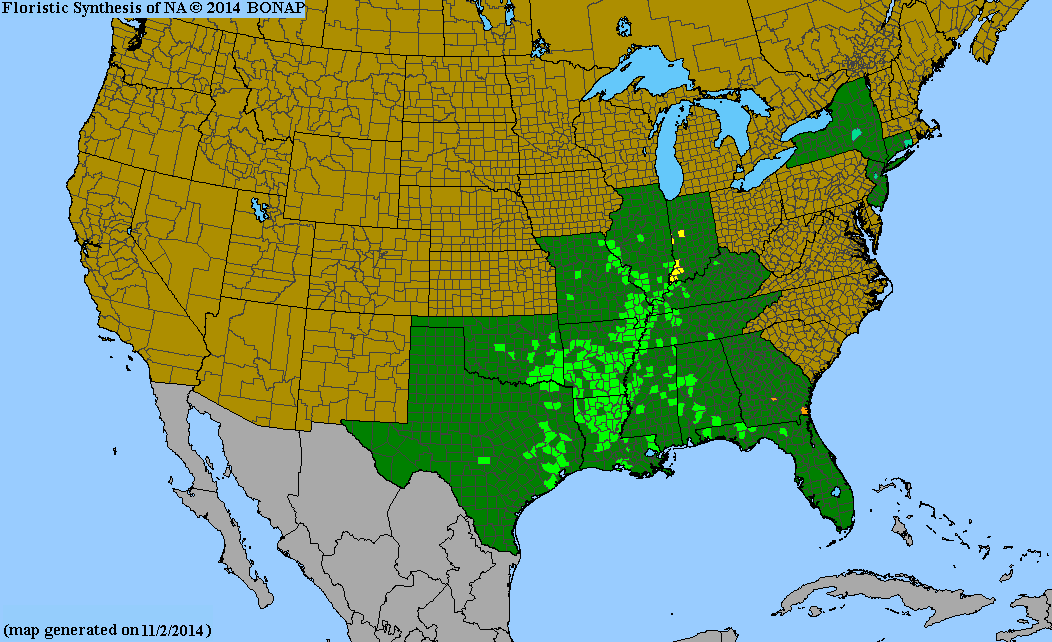
Vitis palmata (common names are catbird grape, cat grape, and Missouri grape ) is a New World species of tall, climbing liana in the grape family native to the south-central and southeastern parts of the United States, from Texas east to…
≈ 2 min read
Names in other languages
No names in other languages are held for this entry yet.
Article bodies are English and are not machine-translated. A name in another language is not a translation of the article.
Vitis palmata (common names are catbird grape, cat grape, and Missouri grape ) is a New World species of tall, climbing liana in the grape family native to the south-central and southeastern parts of the United States, from Texas east to Florida and northwards along the Mississippi Valley to Illinois. There are additional reports of isolated populations in the Northeast, but these are probably introductions. ) The species does best in wet habitats but is adaptable enough to occasionally take root in higher-ground habitats.
It is sometimes found at the edges of fences.
Description
The epithet "palmata" notes its characteristic, palmately lobed leaves (3–5 lobes per leaf, acuminate with rounded sinuses). These are ovate, and typically about 10–15 cm long and wide, usually lacking hairs. Its tendrils are branched.
Its flowers appear in late Spring. The inflorescences are densely compound panicles measuring 5–15 cm in length. Its dark purple or blackish berries measure 5–8 mm in diameter, and come into ripeness late in the Summer.
They are consumed by many birds and animals, and can be made into wild grape jelly, although not all are juicy or particularly flavorful. Leaves and tendrils, flowers and fruit all spring from herbaceous, crimson branches
External links
Plants of the World: Vitis palmata Flora of North America: Vitis palmata JPG of the leaves of Vitis palmata from luirig.altervista.org
Text derived from https://en.wikipedia.org/w/index.php?oldid=1297710821 under CC BY-SA 4.0; modifications have been made.