Walnut twig beetle
Pityophthorus juglandis, also known as the walnut twig beetle, is a Scolytinae that feeds on several different species of walnut trees (Juglans).
≈ 2 min read
Walnut twig beetle. encyclopegia.org, snapshot enwiki-001376512686. /a/walnut-twig-beetle
Names in other languages
No names in other languages are held for this entry yet.
Article bodies are English and are not machine-translated. A name in another language is not a translation of the article.
Pityophthorus juglandis, also known as the walnut twig beetle, is a Scolytinae that feeds on several different species of walnut trees (Juglans). It is one of only a few species in the genus Pityophthorus that is associated with hardwoods and the only one associated with walnut trees.
Description
Pityophthorus juglandis can easily be distinguished from other members of its genus. Curtis Utley, a researcher at Colorado State University, elaborates on these differences stating, "Among these differences there are the 4 to 6 concentric rows of asperities on the prothorax, usually broken and overlapping at the median line.
The declivity at the end of the wing covers is steep, very shallowly bisulcate, and at the apex it is generally flattened with small granules." The walnut twig beetles' small size is common for its genus. Adult beetles average between 1.5 and 1.9 millimeters in length.
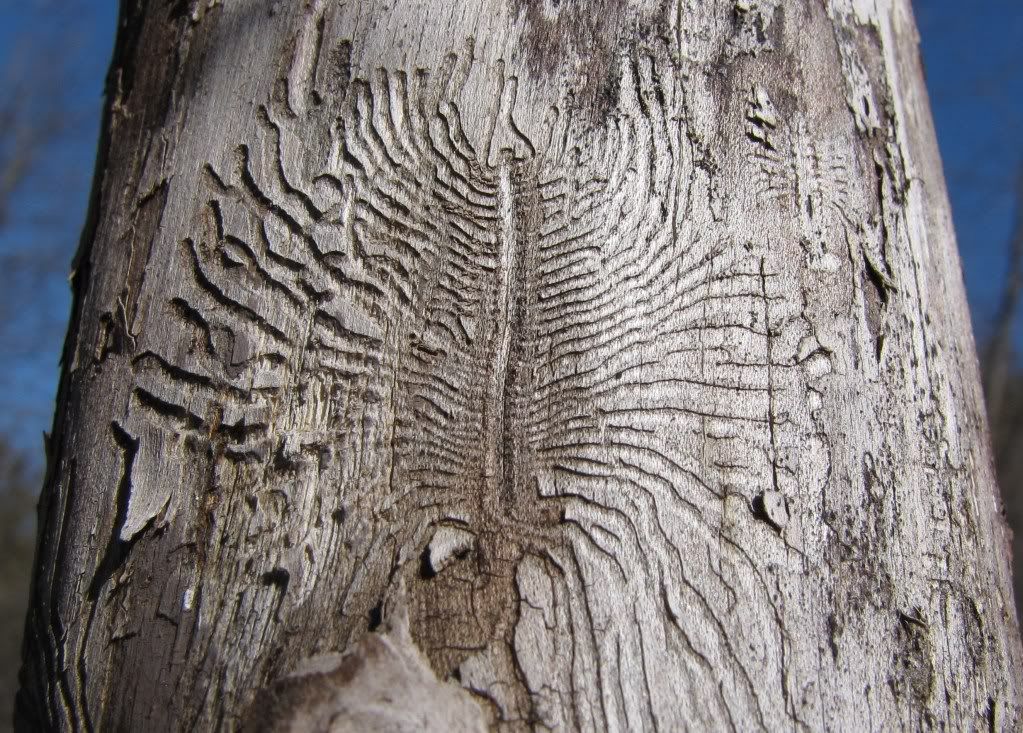
Although little is known about the life-cycle of the walnut twig beetle, during experimentation with the beetle in a controlled environment, the lifespan of one generation of walnut twig beetles was seven weeks after logs of black walnut, Juglans nigra, were harvested from the wild in May, marking what scientists think is the beginning of the feeding season of the walnut twig beetle. Gatherings of the beetle in sections of the walnut tree are known as galleries.
The outward appearance of the walnut above these galleries seemed normal except for small beetle entrance holes. In later stages of decline, beetle entrance holes and galleries were found scattered every 2 to 5 centimeters, essentially crippling the tree.
The walnut twig beetle is commonly associated with the fungus Geosmithia morbida that causes damage ranging from discoloration in some species of walnuts to mortality in others. "Thousand cankers disease" was given its name because of the magnitude of galleries and subsequent cankers created by the disturbance regime of walnut twig beetles and Geosmithia morbida.
The black walnuts only survived for several years after the start of feeding by the walnut twig beetle. However other species of walnut that are more regenerative towards Geosmithia morbida allowed the walnut twig beetle to feed for longer.
Text derived from https://en.wikipedia.org/w/index.php?oldid=1376512686 under CC BY-SA 4.0; modifications have been made.